
EU Battery Regulation 2027: removable batteries and QR codes
EU Battery Regulation 2027: from 18 February 2027, built-in portable batteries must be user-replaceable and every battery needs a QR code. What to do now.

Vehicles need type-approval, but many products around them are CE products: batteries, chargers, e-bikes and connected accessories. Those need a business in the EU that holds the documents.
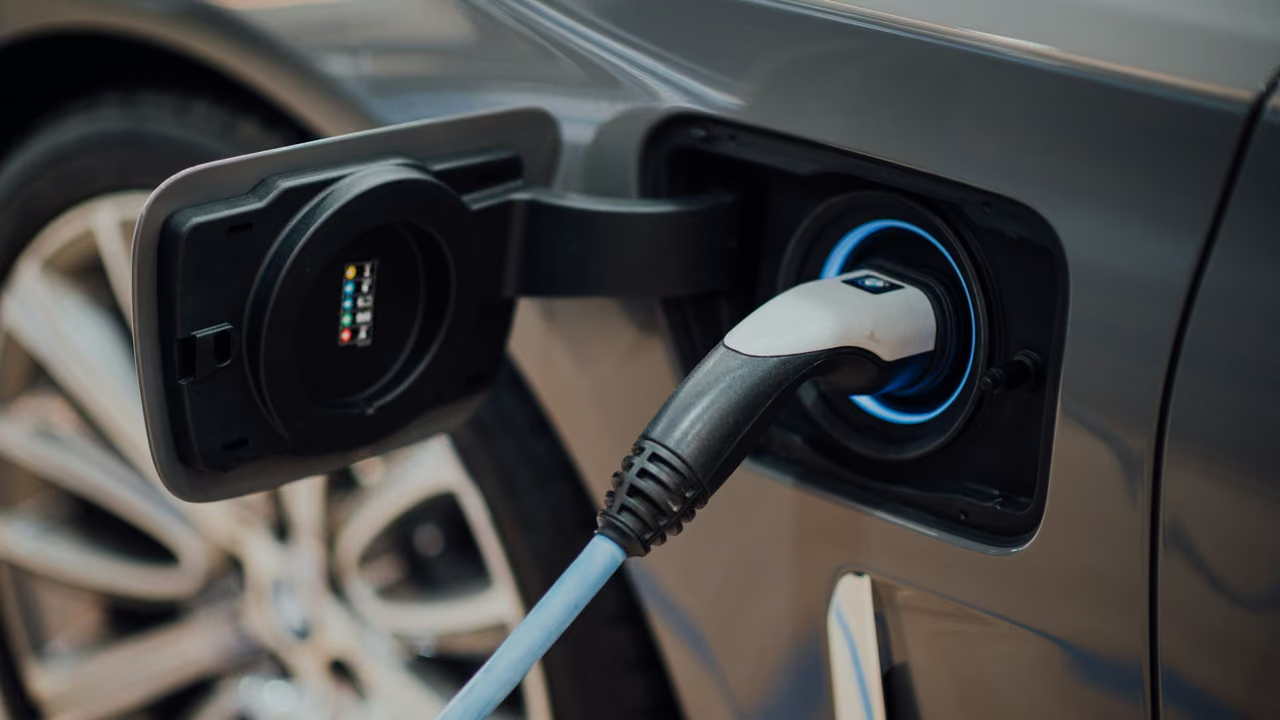
2027
From 18 February 2027 EV and LMT batteries, including e-bike batteries, need a battery passport.
25 km/h
Pedal-assisted e-bikes up to 25 km/h and 250 W fall under the machinery rules, not vehicle type-approval.
RED
Wi-Fi, mobile or an RFID card reader make a wallbox radio equipment. If it can reach the internet, cybersecurity rules apply: under the RED since 1 August 2025, under the Cyber Resilience Act from 11 December 2027.
Pick a product to see the EU rules it usually falls under. Yours may differ, so we check each one.
EV and LMT batteries
Battery passport from 18 February 2027; e-bike batteries count as LMT batteries.
Battery passport, QR code and replaceable portable batteriesBatteries Regulation
Wallboxes and chargers
Radio, even an RFID card reader, makes it radio equipment; if it can reach the internet, the RED cybersecurity rules apply since 1 August 2025.
All Cyber Resilience Act requirements applyCyber Resilience Act
E-bikes up to 25 km/h
Up to 25 km/h and 250 W: machinery rules, not vehicle type-approval.
Machinery Regulation replaces the Machinery DirectiveMachinery Regulation
E-scooters
Standing e-scooters are not type-approved vehicles; road use is regulated by each country.
Machinery Regulation replaces the Machinery DirectiveMachinery Regulation
Connected accessories such as dashcams
Radio equipment with its cybersecurity rules; the GPSR covers consumer use.
All Cyber Resilience Act requirements applyCyber Resilience Act
Vehicles and their systems
EU type-approval, with a single representative for manufacturers outside the EU (Art. 13(4)).
The next dates from the rules on this page.
Reporting of actively exploited vulnerabilities and severe incidents
Cyber Resilience Act
2 October 2026
Machinery Regulation replaces the Machinery Directive
Machinery Regulation
Battery passport, QR code and replaceable portable batteries
Batteries Regulation
Due diligence obligations for battery raw materials
Batteries Regulation
All Cyber Resilience Act requirements apply
Cyber Resilience Act

We hold the documents for your CE products in the EU, from batteries to wallboxes.

We check which rules apply to e-bikes, scooters, chargers and batteries.

We plan the battery passport and the switch to the Machinery Regulation with your team.
Vehicle type-approval has its own representative for manufacturers outside the EU (Art. 13(4) of Regulation (EU) 2018/858). It is separate from representation for CE products.
Yes. Pedal-assisted e-bikes up to 25 km/h and 250 W fall under the Machinery Directive, and from 20 January 2027 under the Machinery Regulation. Faster speed pedelecs need vehicle type-approval.
Standing e-scooters are not type-approved vehicles in the EU. They fall under the machinery rules, EMC, RoHS, WEEE, the battery rules and the GPSR. Road use is regulated by each country.
Yes, if it is radio equipment, for example with Wi-Fi, mobile, Bluetooth or an RFID card reader, and can itself communicate over the internet, directly or via other equipment (Article 1(1) of Delegated Regulation (EU) 2022/30). This applies since 1 August 2025; from 11 December 2027 the Cyber Resilience Act applies instead.
Yes. E-bike batteries are LMT batteries, and every LMT battery placed on the market from 18 February 2027 needs a battery passport (Art. 77 of Regulation (EU) 2023/1542).
Yes, for type-approval: a single representative before the approval authority under Article 13(4) of Regulation (EU) 2018/858.
EU Battery Regulation 2027: from 18 February 2027, built-in portable batteries must be user-replaceable and every battery needs a QR code. What to do now.
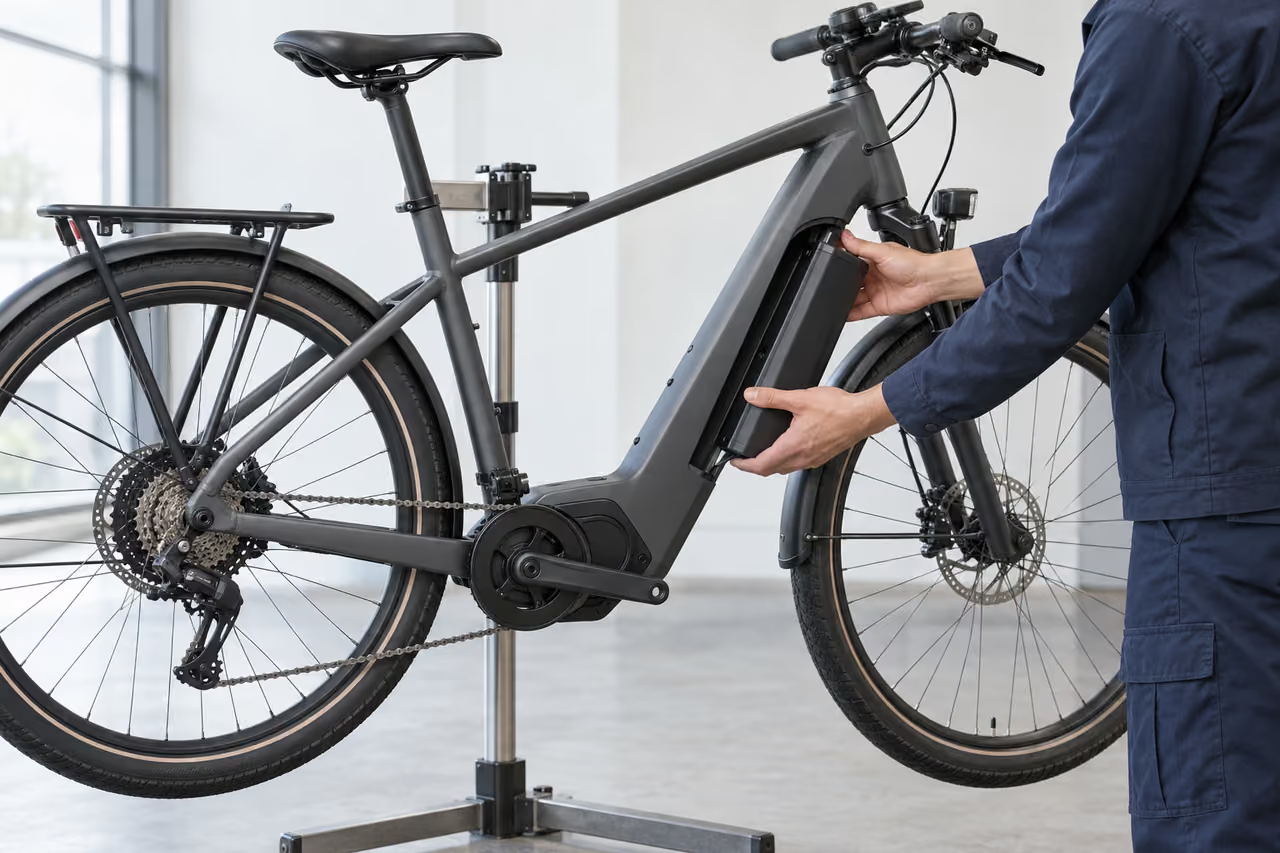
E-bike CE marking and e-scooter rules in the EU: which vehicles need type approval, which fall under machinery law, and what 2027 brings for batteries.
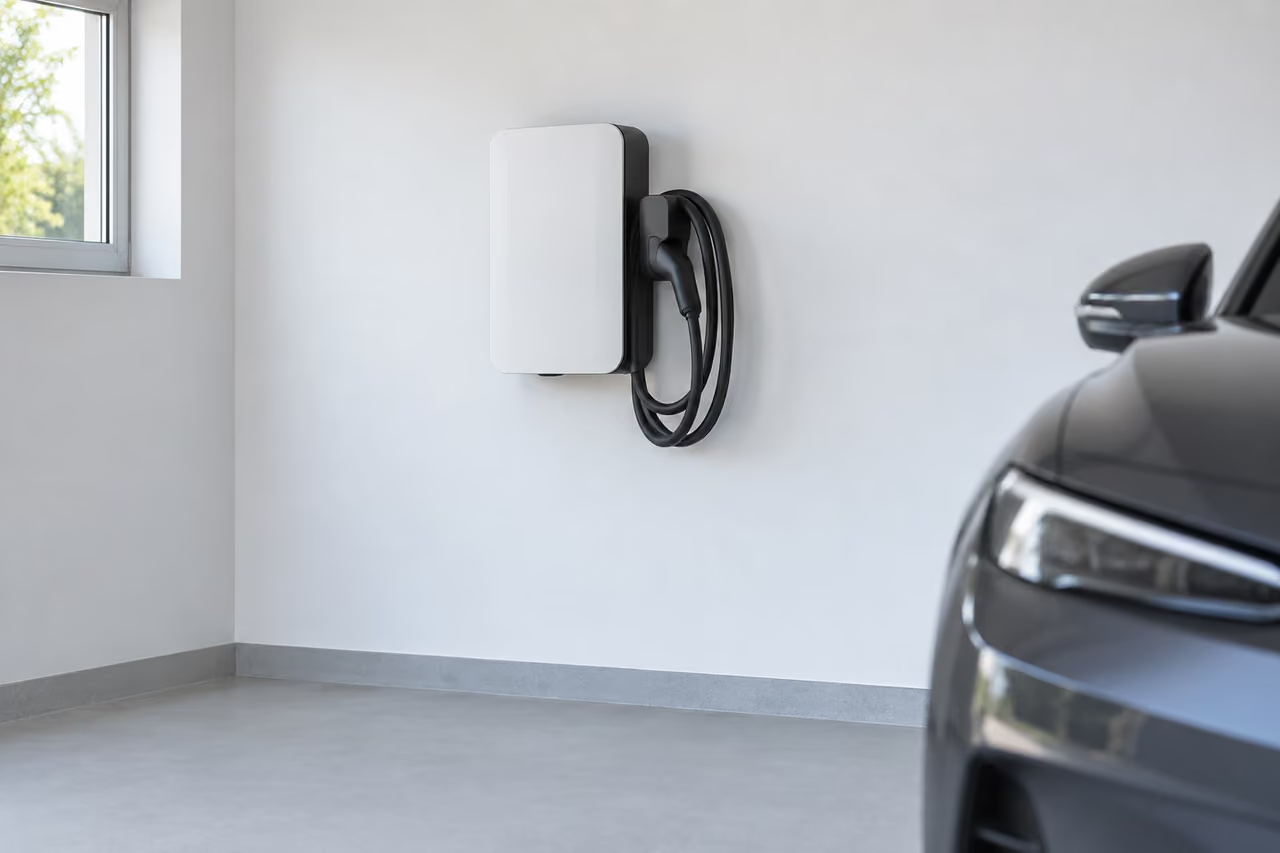
EV charger CE marking explained: LVD, EMC or RED, RoHS, WEEE, RED cybersecurity, the Cyber Resilience Act, AFIR and who must be based in the EU.
Representa secured our EU Authorized Representative appointment within 48 hours, saving our shipment from costly delay.
They turned the CE Marking process into clear, actionable steps, helping us meet our launch timeline and pass compliance the first time.
Thanks to Representa, our products became fully GPSR-compliant well before the deadline, ensuring uninterrupted marketplace sales.
Our beauty cosmetics line faced labeling issues, but Representa's quick review and precise updates got us approved without delay.
The onboarding was fast and transparent. Representa made EU compliance simple and gave us confidence to expand across Europe.
We were unsure how to manage new GPSR rules. Representa guided us step by step, keeping us fully compliant and avoiding delays.

Send us your product list. We map the applicable rules and the role we can take for you.
Tell us what you manufacture and where you want to sell. We identify the requirements for EU and UK market access and come back to you with the next steps.